📖 Luke 1:1–25 — Catholic Bible Study Guide
The Prologue & The Announcement of John's Birth
🗺️ ANCIENT CONTEXT
Who Was Luke?
Luke was a Gentile physician and traveling companion of St. Paul (Colossians 4:14). He was likely writing around A.D. 60–80, and his Gospel is addressed to "Theophilus" — a Greek name meaning "lover of God." Many scholars believe Theophilus was a real Roman official of high standing, while others see the name as addressing every sincere seeker of truth. Either way, Luke is writing to someone outside the Jewish world, signaling that this story is for all humanity.
The 400 Years of Silence*
Between the prophet Malachi and the opening of Luke 1, approximately 400 years passed with no prophetic voice in Israel. No angel. No vision. No word from God. The Jewish people lived under foreign occupation — first Greek, then Roman — waiting for the promised Messiah. Luke 1 shatters that silence with thunder.
Herod the Great
Luke anchors the story in real history: "In the days of Herod, King of Judea" (1:5). Herod was a ruthless Roman-appointed ruler of Jewish descent. His reign was marked by massive building projects (including the expansion of the Temple) and brutal political violence. This is the world into which God sends His angel.
The Priestly Divisions
Zechariah belonged to "the priestly division of Abijah" (1:5) — one of 24 rotating divisions of priests who served in the Temple. Each division served twice a year for one week. Being chosen by lot to burn incense in the sanctuary was a once-in-a-lifetime honor for most priests. The casting of lots was understood as God's hand directing the outcome (Proverbs 16:33). This was Zechariah's singular moment — and God was waiting for him there.
🏛️ VERSE-BY-VERSE COMMENTARY
The Prologue (1:1–4)
Luke opens not with poetry or prophecy, but with the careful language of a historian. He claims to have "investigated everything accurately" — the Greek word used (parakολoutheō) means to follow alongside something closely, the way a physician tracks a patient's condition. This is deliberate, methodical truth-telling.
The word "fulfilled" in verse 1 is critical. Luke doesn't say events that happened — he says events that were fulfilled. This entire Gospel is the completion of a promise made long before. The Old Testament is the setup. Luke is the payoff.
"Theophilus" receives the Gospel so he may "realize the certainty" of what he has been taught. The Greek word (asphaleia) means security, stability, firm ground. Luke is saying: you can stand on this.
Zechariah and Elizabeth (1:5–7)
Two people are introduced: a priest and his wife. Both are described as "righteous in the eyes of God... blamelessly." This is remarkable language. They aren't just good people — they are declared just before God Himself.
Yet they suffer. Elizabeth is barren. This detail would have carried enormous weight in ancient Jewish culture, where barrenness was sometimes misread as a sign of divine disfavor. But Luke immediately corrects any such misreading — they are blameless. Their suffering is not punishment. God has a plan they cannot yet see.
This echoes the great barren mothers of the Old Testament:
-Sarah (Genesis 17–18) — mother of Isaac
- Hannah (1 Samuel 1) — mother of Samuel
- Rachel (Genesis 30) — mother of Joseph
Each time God opens a barren womb, something world-changing follows. Luke is signaling: here we go again — only bigger.
The Angel Appears (1:8–12)
Zechariah enters the Holy Place to burn incense — the inner sanctuary of the Temple. The people pray outside. This was the closest a priest could come to the Holy of Holies without being the High Priest on Yom Kippur.
The incense offering in Jewish theology represented the prayers of the people rising to God (Psalm 141:2; Revelation 8:3–4). At the very moment of intercession, Gabriel appears.
The angel stands "at the right of the altar" — the right side in Scripture consistently represents favor, blessing, and authority. Zechariah's reaction? Fear. This is the standard human response to an encounter with divine presence throughout Scripture — not because angels are evil, but because holiness in the presence of sinful humanity is overwhelming.
The Announcement (1:13–17)
Gabriel's first words are "Do not be afraid" — the most repeated command in all of Scripture. Then comes the stunning declaration:
Your prayer has been heard.
Zechariah had almost certainly prayed for a child for decades. The verb tense in the Greek suggests this was an ongoing, persistent prayer. And now, when it seems biologically impossible, God answers. The lesson is not subtle: God hears every prayer, and His timing is not our timing.
The child to be born will:
- Be named John (Hebrew: Yohanan — "God is gracious" )
- Bring joy to many
- Be filled with the Holy Spirit from the womb
- Turn Israel back to God
- Come in "the spirit and power of Elijah" (v. 17)
That last point is everything. Malachi 4:5 had promised: "I will send you Elijah the prophet before the great and terrible day of the Lord comes." John the Baptist is that fulfillment. The 400 years of silence end here.
Zechariah's Doubt and His Silence (1:18–22)
Zechariah asks: "How shall I know this? For I am an old man, and my wife is advanced in years."
Compare this to Mary's question in verses 34–38: “How can this be?" On the surface they look similar — but they are profoundly different.
Mary asks how — she accepts the reality and seeks understanding.
Zechariah asks for a sign — he doubts the reality and seeks proof.
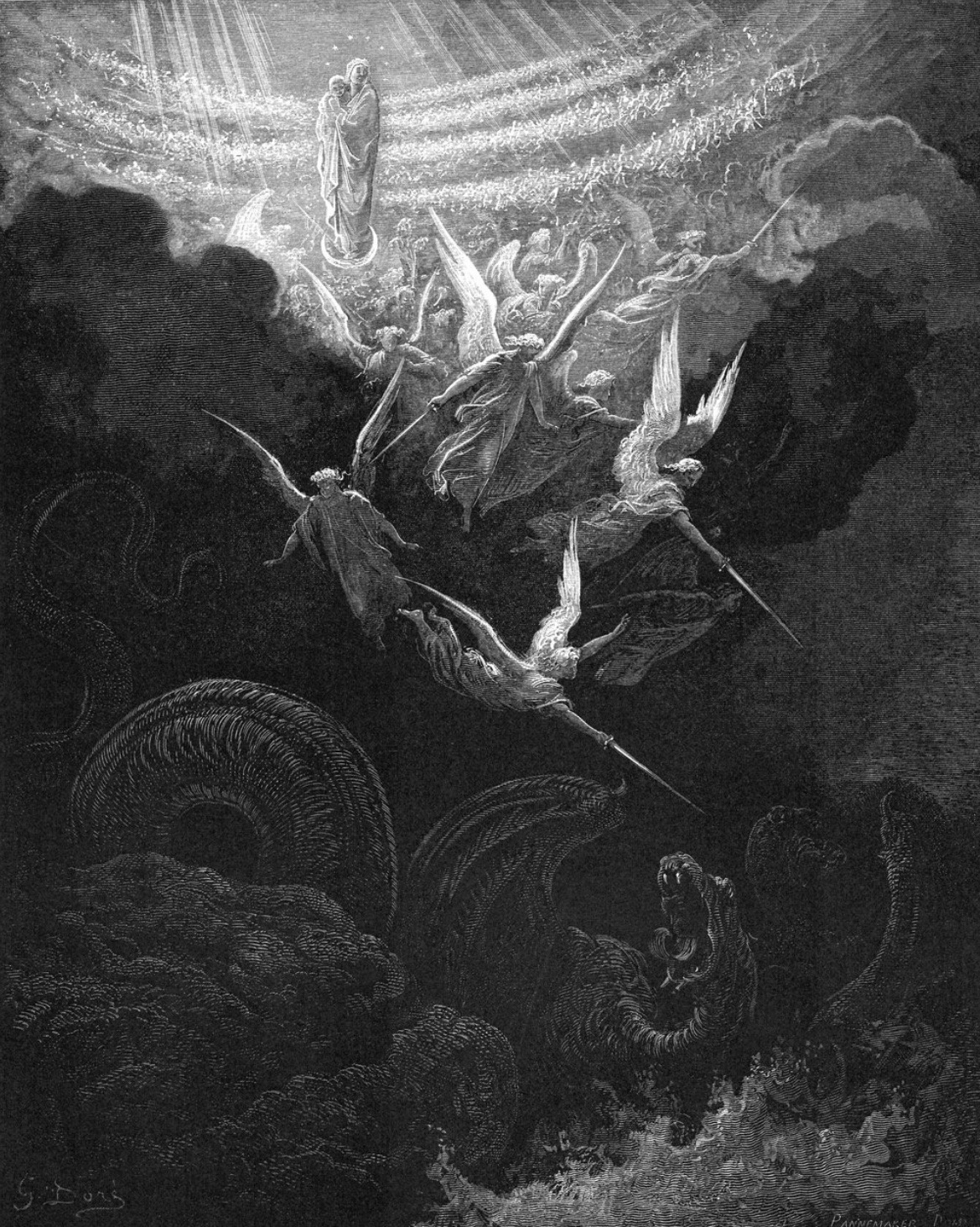
Gabriel's response is both gentle and firm. He identifies himself — “I am Gabriel, who stand before God" — one of only two angels named in all of canonical Scripture (the other is Michael). His authority is absolute. His word is God's word. And Zechariah will be mute until the promise is fulfilled.
This is not cruel punishment. It is a mercy wrapped in discipline. Zechariah's silence becomes his school of faith. Every day he cannot speak, he is reminded: God said something. Wait for it.
Elizabeth Conceives (1:23–25)
When Zechariah returns home, Elizabeth conceives. Her response is deeply moving: “So has the Lord done for me at a time when he has seen fit to take away my disgrace before others" (1:25).
She doesn't boast. She doesn't demand credit. She recognizes that God has acted — and she receives it as mercy, not entitlement. She goes into seclusion for five months. This is a woman entering into the mystery of what God is doing, quietly and gratefully.
🌎 MODERN APPLICATION
| Ancient Reality | Modern Parallel |
| Barrenness seen as shameful | Infertility still carries grief and stigma today |
| Waiting 400 years for God to speak | Seasons of silence in prayer feel like abandonment |
| Zechariah doubting the impossible | We struggle to believe God can heal what seems beyond repair |
| Elizabeth's quiet, hidden joy | True faith often grows in hiddenness before it bears public fruit |
The deepest modern question Luke 1:1–25 raises is this: What prayers have you been bringing to God for years — and do you still believe He hears them?
Zechariah had prayed so long he had stopped expecting an answer. Many believers today are in the same place — faithful, blameless, and quietly wondering if God is listening. Luke's answer is thunderous: He hears. He moves. He comes.
🕯️ MEDITATION
Sit quietly with this scene. You are Zechariah. You have done everything right your whole life. You serve faithfully. You love your wife. You pray. You wait. And then one day — in the middle of an ordinary act of worship — heaven opens.
Ask yourself:
- Have you stopped expecting God to answer a specific prayer?
- Is there a "barren" area of your life — a relationship, a calling, a hope — that you have quietly given up on?
- Are you in a season of "silence" like Zechariah — where God seems to have stopped speaking?
The angel's words are for you too: "Do not be afraid. Your prayer has been heard."
📚 STUDY QUESTIONS
Comprehension
1. Who was Luke writing to, and what was his stated purpose?
2. What was Zechariah's priestly role, and why was it significant?
3. What did Gabriel say John would do before the Lord?
Reflection
4. Why do you think God chose an elderly, barren couple to be the parents of John the Baptist rather than a young, fertile couple?
5. What is the difference between Zechariah's question and a question of genuine faith-seeking? Where do you fall on that spectrum?
6. Elizabeth withdraws for five months after conceiving. What might that hiddenness represent spiritually?
Application
7. Is there a prayer in your life that you have prayed for so long you've stopped expecting an answer? What would it mean to bring it back to God with renewed trust?
8. Zechariah's silence was both consequence and gift. Have you ever experienced a "forced silence" — a circumstance that made you stop and listen — that turned out to be a grace?
Going Deeper
9. Gabriel says John will come "in the spirit and power of Elijah." Read Malachi 4:5–6 and 1 Kings 18–19. What does Elijah's life tell us about the kind of ministry John would have?
10. The incense offering represented the prayers of the people rising to God. How does this image speak to your own understanding of prayer and intercession?
🙏 CLOSING PRAYER
Lord, like Zechariah, there are moments when we stand before You and doubt the very promises You have spoken. Forgive our faithlessness. Open our ears to hear what You are saying in our seasons of silence. And give us the faith of Elizabeth — to receive Your gifts with humility and hide them in our hearts until the time You have chosen to reveal them. Amen.
Next is Part 2
📖 Luke 1:26–38 — The Annunciation: The Angel Visits Mary
What do you find more relatable — Zechariah's doubt or Elizabeth's quiet trust — and why?
-Truthly