Matt Fradd
Spirituality/Belief • Books • Writing
Why Money, Power, Fame, etc. CANNOT Make You Happy
January 31, 2024
post photo preview

In the first part of the second part of the Summa, Aquinas goes through all the things men turn to in their search for happiness and shows why they all fail. You can read through them here.

Here's a quick summary of each article written by Msgr. Paul Glenn that I think you'll find helpful. Right to the point and clear.

I won't get into what will make us imperfectly happy in this lfie or perfectly happy in the hereafter, we'll just stick in this article to all the things that don't work.

Wealth

Man's happiness is not to be found in wealth, whether this be natural wealth which serves his normal needs (such as food, clothing, housing), or artificial wealth which can provide the items of natural wealth, that is, money. Wealth of any kind is a means for acquiring something else; it is a thing that serves; it does not fulfill. Hence it cannot be the true last end of man and the object that will render him enduringly and completely happy.

Honors

Nor can man's full happiness consist in honors bestowed because of some excellence in him. Any excellence in a man is in him by reason of some good already possessed; it means that he already has some degree of happiness. Honors come to him because of this happiness, and therefore honors cannot themselves be the constituting elements of perfect happiness.

Fame and Glory

Nor can man's happiness be found in fame and glory. These, like honors bestowed, presuppose some degree of happiness already attained, and this they publicize and praise. Fame and glory are consequent upon an imperfect happiness, and are, in some sense, the product of it. They cannot, therefore, be the essential elements of perfect happiness.

Power

Man's perfect happiness cannot consist in the possession of power, for power is not a complete end, but a means; power is valuable according to the use to which it may be put. In a word, power looks on to something further; it cannot itself be the ultimate goal.

Goods of the Body

Man's ultimate happiness does not consist in goods of the body - life, health, strength, beauty, agility, etc. - for these goods preserve the body and its perfections. Merely to preserve life cannot be the end of life. Goods of the body are to be used by reason (intellect and will) somewhat as a ship is used by its master; the master does not use the ship merely to preserve the ship, but to carry profitable cargoes to desired ports. Thus it appears that the goods of the body are means, not complete ends. Besides, man is a rational being as well as a bodily being; he can never be completely fulfilled and satisfied by bodily goods.

Pleasure

Pleasures, whether bodily or intellectual, cannot bringa man ultimate happiness. We have just seen that bodily things cannot be man's perfect fulfillment. And mental enjoyments presuppose the end already attained; enjoyment follows upon possession of some good or end; what is consequent upon the end cannot itself be the end.

Goods of the Soul

The goods of the soul - its essence, faculties, acts, habits, perfections - cannot constitute man's ultimate end. Happiness is for the soul, and to be attained by the soul. The objective ultimate happiness is something outside the soul, which the soul seeks to bring into itself and possess subjectively. Hence this ultimate end is not the soul itself, nor the goods belonging to the soul.

 Indeed, no created good can give man perfect happiness. Only the essential, universal, and boundless good can bring man complete and unfading fulfillment. No created good is universal, essential, and boundless; only the uncreated good can be the ultimate end of man. And this uncreated good is God.


community logo
Join the Matt Fradd Community
To read more articles like this, sign up and join my community today
2
What else you may like…
Videos
Podcasts
Posts
Articles
December 10, 2025
Christmas with Dr. Scott Hahn | Tracing the Fulfillment of Prophecies

To most, the Incarnation is so familiar that we have lost touch with what a scandal the manger would have been in its time.

In this Advent and Christmas episode, Matt Fradd welcomes Biblical scholar, Dr. Scott Hahn, to examine prophetic texts of the Old Testament that lay the ground for the arrival of the Christ child, covenants that prepared the way, and the earth shattering reality of God becoming an embryo.

Together they uncover the layers and depth of the Christmas scriptures and God's plan for you, while exploring typology, the significance of Mary's role in salvation history, and the meaning of the manger. EP. 00

Get 40% off the Ignatious Catholic Study Bible now HERE:
https://stpaulcenter.com/store/ignatius-catholic-study-bible-old-and-new-testaments

Why Do We Identify with Charlie Kirk? - Fr. Gregory Pine, O.P.

In the wake of Charlie Kirk's assassination, many people have experienced a profound dismay. We didn't know him, and yet the events of the past week have really thrown us for a loop. Why exactly is that? And what is to be learned from the experience?

Also, I have a new book out. You can find it here: https://www.amazon.com/Your-Eucharistic-Identity-Sacramental-Fullness/dp/162164796X/ref=sr_1_1?crid=2ELJ81ZJUVT1G&dib=eyJ2IjoiMSJ9.HRZlgfwsmxjGFj1ePRw-OgluBhzhKL7XiQCNKyHEK_s.V0RluCVNmFRjkIZWue1otfyktDPiZN_QnWrjE_LTPtU&dib_tag=se&keywords=your+eucharistic+identity+gregory+pine&qid=1756821967&sprefix=your+eucharistic+%2Caps%2C107&sr=8-1

00:19:09
Where Should I Live? On Cultivating Intentional Community - Fr. Gregory Pine, O.P.

A lot of folks have to decide, at one point or another, where they are going to live and what parish they are going to attend. At times you might be torn between growing where you're planted and moving to where you're nourished. I was in Tulsa this past weekend with a really excellent community, and it sparked some though on the theme.

Also, I have a new book out. You can find it here: https://www.amazon.com/Your-Eucharistic-Identity-Sacramental-Fullness/dp/162164796X/ref=sr_1_1?crid=2ELJ81ZJUVT1G&dib=eyJ2IjoiMSJ9.HRZlgfwsmxjGFj1ePRw-OgluBhzhKL7XiQCNKyHEK_s.V0RluCVNmFRjkIZWue1otfyktDPiZN_QnWrjE_LTPtU&dib_tag=se&keywords=your+eucharistic+identity+gregory+pine&qid=1756821967&sprefix=your+eucharistic+%2Caps%2C107&sr=8-1

00:19:28
Simple NEW Lofi Song

Working on an entire album of lofi music. Here's one of those songs. Album should drop next week. THEN, a couple of weeks after that we hope to have our 24/7 stream up and running.

Simple NEW Lofi Song
December 01, 2022
Day 5 of Advent

THE ERROR OF ARIUS ABOUT THE INCARNATION

In their eagerness to proclaim the unity of God and man in Christ, some heretics went to the opposite extreme and taught that not only was there one person, but also a single nature, in God and man. This error took its rise from Arius. To defend his position that those scriptural passages where Christ is represented as being inferior to the Father, must refer to the Son of God Himself, regarded in His assuming nature, Arius taught that in Christ there is no other soul than the Word of God who, he maintained, took the place of the soul in Christ’s body. Thus when Christ says, in John 14:28, “The Father is greater than I,” or when He is introduced as praying or as being sad, such matters are to be referred to the very nature of the Son of God. If this were so, the union of God’s Son with man would be effected not only in the person, but also in the nature. For, as we know, the unity of human nature arises from the union of soul and body.

The...

Day 5 of Advent
November 27, 2022
Day 1 of Advent

RESTORATION OF MAN BY GOD THROUGH THE INCARNATION

We indicated above that the reparation of human nature could not be effected either by Adam or by any other purely human being. For no individual man ever occupied a position of pre-eminence over the whole of nature; nor can any mere man be the cause of grace. The same reasoning shows that not even an angel could be the author of man’s restoration. An angel cannot be the cause of grace, just as he cannot be man’s recompense with regard to the ultimate perfection of beatitude, to which man was to be recalled. In this matter of beatitude angels and men are on a footing of equality. Nothing remains, therefore, but that such restoration could be effected by God alone.

But if God had decided to restore man solely by an act of His will and power, the order of divine justice would not have been observed. justice demands satisfaction for sin. But God cannot render satisfaction, just as He cannot merit. Such a service pertains to one who ...

Day 1 of Advent
December 16, 2025
post photo preview
6 Month Daily Wire+ Membership (FREE!)

Hello dear Locals member!

I want to thank you again for your support. And I'm not talking about your hard earned money (though I'm grateful for that!). I'm thankful for you for trusting me during this transition. And more than that, some of you have even come to my defense when haters online have accused me of selling out to those nefarious Jews!

Here's a comment we just got on my interview with Scott Hahn:

"What an absolute delight. I hope that everyone who was throwing shade and casting judgement on the new PWA/DW relationship takes a deep listen to this first post-collaboration episode. Seriously! I feel that having Hahn on speaks volumes to the integrity of PWA and the respect DW has for that integrity." - @arealdonut

Okay ... with that out of the way, I'm happy to annoucne that:

  • Locals members (whether monthly or annual members) will get 6 months of DailyWire+ for free!
  • Existing Daily Wire subscribers will get a 6 month extension on their account. No action needed.
  • If you’re not yet subscribed to DailyWire+, you’ll be sent an email the week of January 5 containing a unique code for 6 months of DailyWire+ for free.
  • If you’re not subscribed to our emails, be sure to go to pintswithaquinas.com/subscribe, scroll to the bottom where it says “sign up to get the Latest”, enter your name and email and click sign up now.

God bless you guys, and thanks again.

Matt

Read full Article
October 23, 2025
post photo preview
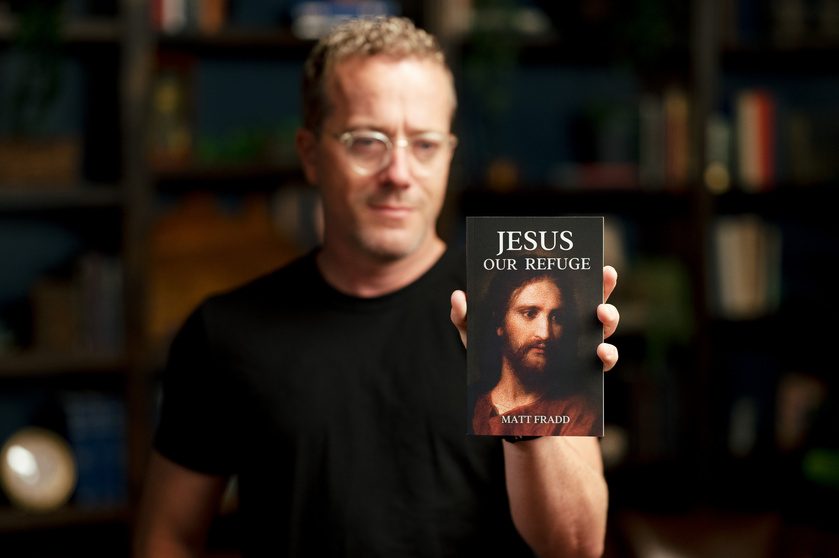
It's finally here! Jesus Our Refuge 🙌

It’s finally here! 

I’ve been pouring my heart into what I truly believe is an important book—Jesus Our Refuge (get here). It’s the most personal thing I’ve ever written, and my hope is that it helps you find peace and refuge in the heart of Jesus. 

Please consider getting a copy here and reviewing!

P.S. I don’t earn anything from this book. When I wrote it, I knew it had to reach far and wide, so I partnered with a publisher who believes in that mission. Every bit of the royalties I’d have received goes into a fund to give away one million copies for free.


Read full Article
post photo preview
What St. Thomas Means by "Curiosity"

In today's livestream I spoke about the sin of curiosity. In this article, I thought I'd sum it up for you in case I didn't do it well in the livestream.

You can read Thomas' own words here, btw. 

For Aquinas, “curiosity” is not simply the healthy desire to know the truth. He distinguishes between the virtue of studiositas—the ordered pursuit of knowledge—and the vice of curiositas, which is the disordered pursuit of knowledge.

Curiosity becomes a vice when we seek knowledge in the wrong way or for the wrong reasons: for pride, idle speculation, gossip, or knowledge that leads us away from God rather than toward Him. For example, indulging in occult practices, probing into sinful matters for fascination, or prying into things that are none of our business (all of social media, or just most?) are all ways that curiosity corrupts the good of knowledge. In other words, knowledge itself is good, but the way we desire, seek, and use it can be distorted.

Aquinas says that curiosity can show itself in several ways: when someone prefers trivial knowledge over what would truly benefit their soul (c'mon ... this is how many people live their lives), when one seeks knowledge to boast or to sin, when one is distracted by an endless hunger for new information at the expense of wisdom, or when one turns to forbidden sources of knowledge.

By contrast, the virtue of studiousness disciplines the intellect so that we seek truth for its own sake, for God’s glory, and for the service of others. Thus, Aquinas sees curiosity not as the love of learning itself, but as the disorder of that love—an appetite for knowing that forgets the proper end of knowledge, which is to lead us to truth and ultimately to God.

So here's a challenge for you and me: What is one practical way that we can avoid curiosity and grow in studiousness?

Read full Article
See More
Available on mobile and TV devices
google store google store app store app store
google store google store app tv store app tv store amazon store amazon store roku store roku store
Powered by Locals