Matt Fradd
Spirituality/Belief • Books • Writing
This PWA community exists to facilitate an online community of PWA listeners and all lovers of philosophy and theology.
Interested? Want to learn more about the community?

Hi Everyone, A few months ago I was asked by a friend of mine to put my testimony of going from a Muslim to a Roman Catholic in writing. He felt this could help a lot of people.

I am still hesitant to share it with the general public because of potential hate. However trusting all of you, I'd love your opinion, and guidance. Please read it below (it's kind of long,) and would love your thoughts.

My Journey to Christ


by Shazib Hassan


My father moved from Pakistan to the United States in 1972. In 1977 he returned to Pakistan to marry my mother, and then brought her back to the U.S. They were what I would call “cultural Muslims.” They would go to the mosque mainly during Ramadan, and for the two Eid celebrations, just as many Catholics will go to a church only on Christmas and Easter.


My father’s own father was a very devout Muslim. But, among my father’s siblings, degrees of faith in Islam varied. Dad was the rebellious son, who identifies as agnostic to this very day.


My mother, on the other hand, still identifies as a Muslim. This identity is more cultural than it is spiritual, largely because it’s what she’d been born into, and what she’d been taught since childhood to never question.


So, I grew up in a household in which my parents didn’t necessarily agree, spiritually, but collectively and culturally we still identified as Muslim.


My father was very proud of being different from the stereotypical Pakistani immigrant, and he encouraged his children to think differently, that we not turn into what we understood as your typical cookie-cutter Pakistani-American family, and so none of my siblings nor I became doctors, engineers, or lawyers.


As a child, though, this was confusing at times.


On the one hand, I was encouraged to integrate, to be a Westerner. I grew up outside of San Jose, California, and later on in Oregon, all in predominantly Caucasian communities, and had incredible friendships with the other neighborhood kids. This was during the 1980’s and early ’90’s, when kids still left the house at sunrise and never come back until it was dinnertime. I would eat lunch at friends’ houses, and their mothers were always happy to make me a sandwich, just as my mother would do so for my friends.


But, at the same time, I’d attended Sunday school at a mosque in Santa Clara, California. Most of my teachers were recent immigrants from the Middle East, and, in retrospect, I realize that many of those who struggled to adapt to Western life were likewise those who ended up teaching in Sunday school. The men among them were assigned to teach the boys, and the women to teach the girls. I remember being told that my closest friends ought to be other Muslims, and that I should avoid integrating too deeply with the pals I’d grown up with, even though their families were stable, loving, and kind.


I openly questioned this, and the teachers weren’t accustomed to being talked back to by a kid. On one occasion, I was hit on the knuckles with a ruler and though to myself: "This is America—you can’t touch me." I stood up and walked out after that, and my parents pulled me out of Sunday school as a result.


I was twelve when my family moved to Oregon, and it was there that I’d really began questioning Islam. I was one of those high schoolers who’d begun identifying himself as agnostic simply after having read a few philosophy books.


It was when I’d gone off to college that I felt like something was missing in my life, that I’d joined the Muslim Students Association (M.S.A.), and suddenly felt again like I belonged to something greater.


My uncle, being my father’s very devout brother, was thrilled by this, and proudly told friends of his that his wayward nephew had returned to Islam. The people he’d told were impressed, since they knew my father well enough, that I was seeming to become the kind of Muslim they wouldn’t have expected. But, deep down, I still felt like a round peg in a square hole, trying to be someone I thought I was supposed to be.


One night in college, I was driving around with two friends—one of mixed race, the other Hispanic—in my father’s brand-new BMW. The windows were down, the sunroof was open, and we were freely (and innocently) dancing in our seats to pop music when I unknowingly pulled the car up next to three Muslim women who’d recognized me from the M.S.A. Later, they complained to the M.S.A. leadership that they’d had seen me dancing with non-Muslim girls, and left the organization as a result.


"That’s between them and Allah," I’d figured at the time, trying to brush the whole incident off. It was later on that night that it hit me: I was still trying to fit into something that didn’t truly fit me.


It was after that realization that I became more open to Christianity. My curiosity first took shape after I’d transferred to U.C. Davis, and joined the College Republicans, which essentially felt like the opposite of the M.S.A. I still have close friends from that group today.


It was at my first meeting that I’d met Michelle. It was like one of those movie moments: she walked into the lecture hall, and all the other guys just stared at her. It was after a moment that I’d stopped looking at her, and started watching the other guys who were still gawking, finding it rather hilarious. She and I became close friends over those next two years.


One night, after having cooked dinner together at her place, we sat on her couch and watched The Mothman Prophecies. We ended up kissing, and nothing more, before falling asleep on the couch.


“Oh my God,” she said the very next morning, looking horrified. “I have to go to confession.”


“Why?” I asked, obviously rather confused.


“Because you’re not Catholic,” she told me, “and I’ve sinned.”


That moment hit me hard.


I realized then I didn’t really like Catholicism. This wasn’t because of Christ Himself, but because I felt objectified as a sin. And, ironically, that very moment planted the first real seed of curiosity about the Catholic faith itself.


I asked her what I would’ve needed to do to become Catholic, and she handed me a copy of the Catechism—unabridged that is. I tried reading it, and didn’t last a week. It felt much like reading The Silmarillion instead of The Hobbit, and so I put it on a shelf—literally and figuratively.


Michelle later went to a Catholic summer camp, where she met her future husband, that put an end to that particular chapter of my life.


After college, I moved to North Carolina, and started going by the name “Sean.” A friend of mine from college lived nearby, and we would visit different Protestant churches together on weekends. I didn’t care for them much—too much rock music, too much feel-good emotion, and Scripture verses on PowerPoint. It felt hollow to me.


It was on Halloween night in 2006 that a friend of mine convinced me - by which I mean practically dragged me - to go to a bar in downtown Raleigh. A friend of mine named Michelle – no, not that one – was already there. She was part of a social group for transplants in the area, and had mentioned earlier that she would be bringing some friends. One of those friends was Bridget, who had just moved from Notre Dame.


Bridget and I talked for two hours that night, and neither of us drank much, since we’d both gotten roped in to be designated drivers. When I found out that she was Catholic, I had an immediate flashback to Michelle – yes, the college one.


Two weeks later, Bridget called me, and we went on our first date. She’s now my wife, and we have four beautiful children together.


It was a month after having met Bridget that I went to my first Catholic Mass, at St. Michael the Archangel in Cary. I’d never experienced anything like it—the structure, the reverence, the kneeling, standing, praying together. When I learned that the same readings were being shared all over the world that day, as well as homilies based upon them, I was blown away.


It felt familiar. As a Muslim, I’d grown up praying as part of a community.


Bridget and I were married in a Catholic Mass in 2008. Many Muslims from my family attended, some of them wearing hijabs, and the monsignor marrying us was overjoyed to celebrate our union before so many Muslims. The agreement had been that we would raise our children Catholic.


I’d been attending Mass, as a non-Catholic, for several years until something changed in the fall of 2014. One Sunday, while feeling frustrated and tired, I questioned Bridget why it was that I even went. This broke her heart. Though we missed the 9 a.m. Mass, I ultimately relented, agreeing to attend the 10:30 one.


That decision changed my life.


It was during that Mass that the R.C.I.A. (Rite of Christian Initiation for Adults,) a program for people exploring and entering the Catholic faith, was dismissed for the Breaking of the Word. As I watched them process out, the Holy Spirit hit me. I looked at my wife and said: “I’m following them.”


I went and knocked on the door, asked if I could join. A fire in me had been lit that I ended up going again the next week, and the week after that, until I was baptized at the Easter Vigil in 2015.


The change in me was immediate. My father noticed. The employees of the company which my father and I ran noticed it, too. Eventually, my father had asked whether Bridget was forcing this upon me. “No,” I assured him. It wouldn’t have worked if she would’ve tried that.


Today, my greatest supporter in my Catholic faith is my father—Mohammad Hassan. I never thought I’d find Jesus Christ through a Mohammad, but here I am.


Jesus was patient with me. And now, here I stand.


I hope my story inspires you.

Interested? Want to learn more about the community?
What else you may like…
Videos
Podcasts
Posts
Articles
Nietzsche, Nihilism, and the Return of God (Dr. J. Budziszewski) | Ep. 577

Dr. J. Budziszewski, philosopher professor at the University of Texas at Austin, and bestselling author of Pandemic of Lunacy is here to tackle some of the deepest questions of our time: the incoherence of nihilism and materialism, Nietzsche's dangerous appeal, transhumanism, sexual ethics, and what it actually means to love. 

Ep. 577

📚 Resources Mentioned:

"Pandemic of Lunacy: How to Think Clearly When Everyone Around You Seems Crazy" by J. Budziszewski: https://a.co/d/01xTwPnk

"The Four Loves" by C.S. Lewis: https://a.co/d/0aoIym8E

02:37:18
Sisters of Life Respond to Real Reddit Posts About Abortion | Last Call Ep. 12

It’s Last Call! The Sisters of Life are back to share a heartfelt message of compassion and hope  to women who have posted about their crisis pregnancies on Reddit. 

Pints: Last Call Ep. 12

📚Resources Mentioned: 

Sisters of Life: https://sistersoflife.org/

Rachel's Vineyard: http://rachelsvineyard.org/

Dr. Bob Schuchts | Healing the Whole Person retreats: https://virtual.jpiihealingcenter.org/course/hwp

Saint John Paul Healing Center: https://jpiihealingcenter.org/

00:31:26
From Witchcraft to Jesus Christ (Shayne Smith) | Ep. 576

Ex-Satanist turned Catholic convert, Shayne Smith, returns for a wide-ranging conversation sharing his past involvement with the occult, thoughts on why the Catholic church is more popular than ever and insight into the life of a comedian. 

Ep. 576

03:08:17
Simple NEW Lofi Song

Working on an entire album of lofi music. Here's one of those songs. Album should drop next week. THEN, a couple of weeks after that we hope to have our 24/7 stream up and running.

Simple NEW Lofi Song
December 01, 2022
Day 5 of Advent

THE ERROR OF ARIUS ABOUT THE INCARNATION

In their eagerness to proclaim the unity of God and man in Christ, some heretics went to the opposite extreme and taught that not only was there one person, but also a single nature, in God and man. This error took its rise from Arius. To defend his position that those scriptural passages where Christ is represented as being inferior to the Father, must refer to the Son of God Himself, regarded in His assuming nature, Arius taught that in Christ there is no other soul than the Word of God who, he maintained, took the place of the soul in Christ’s body. Thus when Christ says, in John 14:28, “The Father is greater than I,” or when He is introduced as praying or as being sad, such matters are to be referred to the very nature of the Son of God. If this were so, the union of God’s Son with man would be effected not only in the person, but also in the nature. For, as we know, the unity of human nature arises from the union of soul and body.

The...

Day 5 of Advent
November 27, 2022
Day 1 of Advent

RESTORATION OF MAN BY GOD THROUGH THE INCARNATION

We indicated above that the reparation of human nature could not be effected either by Adam or by any other purely human being. For no individual man ever occupied a position of pre-eminence over the whole of nature; nor can any mere man be the cause of grace. The same reasoning shows that not even an angel could be the author of man’s restoration. An angel cannot be the cause of grace, just as he cannot be man’s recompense with regard to the ultimate perfection of beatitude, to which man was to be recalled. In this matter of beatitude angels and men are on a footing of equality. Nothing remains, therefore, but that such restoration could be effected by God alone.

But if God had decided to restore man solely by an act of His will and power, the order of divine justice would not have been observed. justice demands satisfaction for sin. But God cannot render satisfaction, just as He cannot merit. Such a service pertains to one who ...

Day 1 of Advent
5 hours ago
post photo preview

Quote of the Day
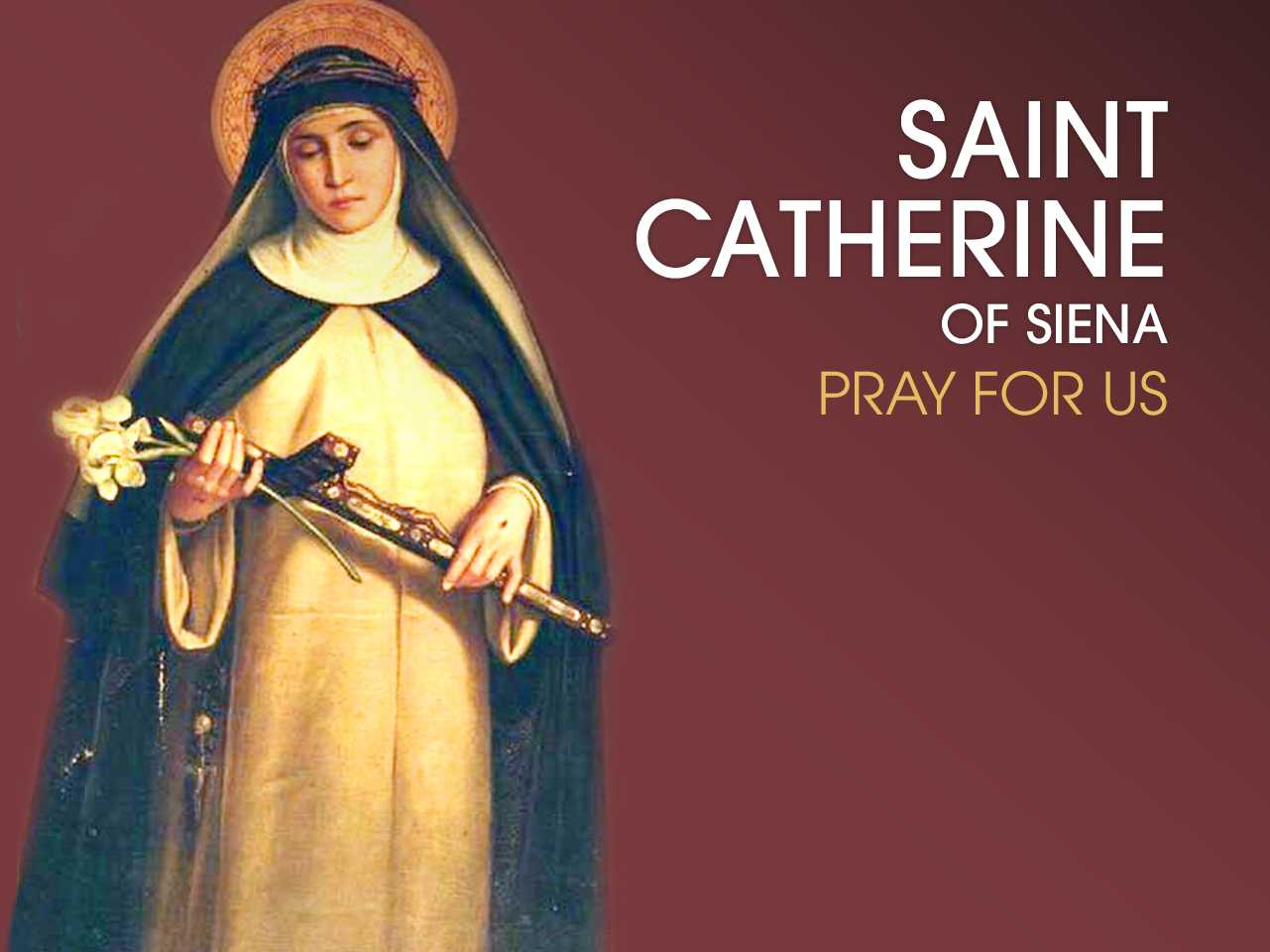
To join two things together there must be nothing between them or there cannot be a perfect fusion. Now realize that this is how God wants our soul to be, without any selfish love of ourselves or of others in between, just as God loves us without anything in between.
St. Catherine of Siena

Today's Meditation
“The soul, who is lifted by a very great and yearning desire for the honor of God and the salvation of souls, begins by exercising herself, for a certain space of time, in the ordinary virtues, remaining in the cell of self-knowledge, in order to know better the goodness of God towards her. This she does because knowledge must precede love, and only when she has attained love, can she strive to follow and to clothe herself with the truth. But, in no way, does the creature receive such a taste of the truth, or so brilliant a light therefrom, as by means of humble and continuous prayer, founded on knowledge of herself and of God; because prayer, exercising her in the above way, ...

post photo preview
18 hours ago

New flags are up

post photo preview
December 16, 2025
post photo preview
6 Month Daily Wire+ Membership (FREE!)

Hello dear Locals member!

I want to thank you again for your support. And I'm not talking about your hard earned money (though I'm grateful for that!). I'm thankful for you for trusting me during this transition. And more than that, some of you have even come to my defense when haters online have accused me of selling out to those nefarious Jews!

Here's a comment we just got on my interview with Scott Hahn:

"What an absolute delight. I hope that everyone who was throwing shade and casting judgement on the new PWA/DW relationship takes a deep listen to this first post-collaboration episode. Seriously! I feel that having Hahn on speaks volumes to the integrity of PWA and the respect DW has for that integrity." - @arealdonut

Okay ... with that out of the way, I'm happy to annoucne that:

  • Locals members (whether monthly or annual members) will get 6 months of DailyWire+ for free!
  • Existing Daily Wire subscribers will get a 6 month extension on their account. No action needed.
  • If you’re not yet subscribed to DailyWire+, you’ll be sent an email the week of January 5 containing a unique code for 6 months of DailyWire+ for free.
  • If you’re not subscribed to our emails, be sure to go to pintswithaquinas.com/subscribe, scroll to the bottom where it says “sign up to get the Latest”, enter your name and email and click sign up now.

God bless you guys, and thanks again.

Matt

Read full Article
October 23, 2025
post photo preview
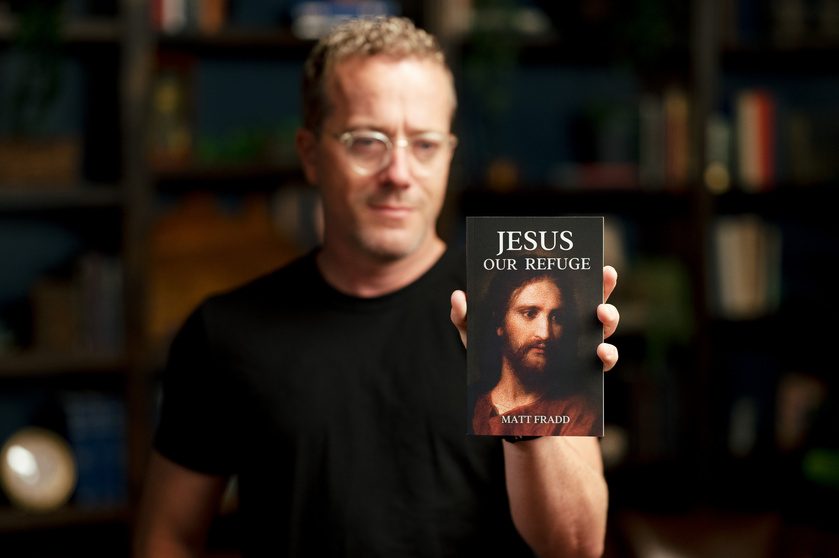
It's finally here! Jesus Our Refuge 🙌

It’s finally here! 

I’ve been pouring my heart into what I truly believe is an important book—Jesus Our Refuge (get here). It’s the most personal thing I’ve ever written, and my hope is that it helps you find peace and refuge in the heart of Jesus. 

Please consider getting a copy here and reviewing!

P.S. I don’t earn anything from this book. When I wrote it, I knew it had to reach far and wide, so I partnered with a publisher who believes in that mission. Every bit of the royalties I’d have received goes into a fund to give away one million copies for free.


Read full Article
post photo preview
What St. Thomas Means by "Curiosity"

In today's livestream I spoke about the sin of curiosity. In this article, I thought I'd sum it up for you in case I didn't do it well in the livestream.

You can read Thomas' own words here, btw. 

For Aquinas, “curiosity” is not simply the healthy desire to know the truth. He distinguishes between the virtue of studiositas—the ordered pursuit of knowledge—and the vice of curiositas, which is the disordered pursuit of knowledge.

Curiosity becomes a vice when we seek knowledge in the wrong way or for the wrong reasons: for pride, idle speculation, gossip, or knowledge that leads us away from God rather than toward Him. For example, indulging in occult practices, probing into sinful matters for fascination, or prying into things that are none of our business (all of social media, or just most?) are all ways that curiosity corrupts the good of knowledge. In other words, knowledge itself is good, but the way we desire, seek, and use it can be distorted.

Aquinas says that curiosity can show itself in several ways: when someone prefers trivial knowledge over what would truly benefit their soul (c'mon ... this is how many people live their lives), when one seeks knowledge to boast or to sin, when one is distracted by an endless hunger for new information at the expense of wisdom, or when one turns to forbidden sources of knowledge.

By contrast, the virtue of studiousness disciplines the intellect so that we seek truth for its own sake, for God’s glory, and for the service of others. Thus, Aquinas sees curiosity not as the love of learning itself, but as the disorder of that love—an appetite for knowing that forgets the proper end of knowledge, which is to lead us to truth and ultimately to God.

So here's a challenge for you and me: What is one practical way that we can avoid curiosity and grow in studiousness?

Read full Article
See More
Available on mobile and TV devices
google store google store app store app store
google store google store app tv store app tv store amazon store amazon store roku store roku store
Powered by Locals