Quote of the Day
"For there are three ways of performing an act of mercy: the merciful word, by forgiving and by comforting; secondly, if you can offer no word, then pray—that too is mercy; and thirdly, deeds of mercy."
St. Faustina Kowalska
Today's Meditation
“Tell souls not to place within their own hearts obstacles to My mercy, which so greatly wants to act within them. My mercy works in all those hearts which open their doors to it. Both the sinner and the righteous person have need of My mercy. Conversion, as well as perseverance, is a grace of My mercy. Let souls who are striving for perfection particularly adore My mercy, because the abundance of graces which I grant them flows from My mercy. I desire that these souls distinguish themselves by boundless trust in My mercy. I myself will attend to the sanctification of such souls. I will provide them with everything they will need to attain sanctity. The graces of My mercy are drawn by means of one vessel only, and that is-trust. The more a soul trusts, the more it will receive. Souls that trust boundlessly are a great comfort to Me, because I pour all the treasures of My graces into them. I rejoice that they ask for much, because it is My desire to give much, very much. On the other hand, I am sad when souls ask for little, when they narrow their hearts.”
—Jesus to St. Faustina, 1577
Daily Verse
"But God, who is rich in mercy, because of the great love he had for us, even when we were dead in our transgressions, brought us to life with Christ (by grace you have been saved), raised us up with him, and seated us with him in the heavens in Christ Jesus, that in the ages to come he might show the immeasurable riches of his grace in his kindness to us in Christ Jesus."
Ephesians 2:4-7
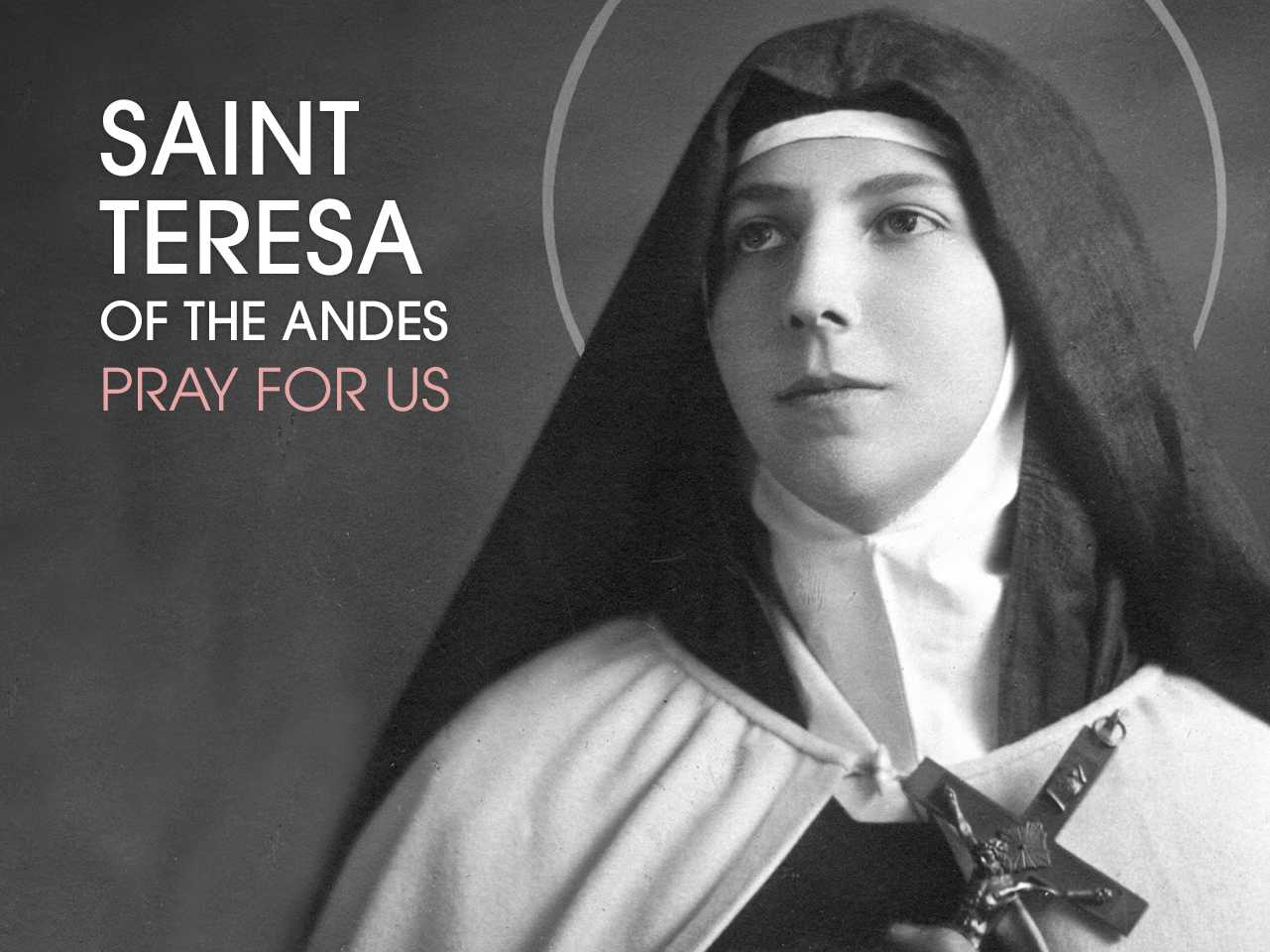
Saint Teresa of the Andes
Saint of the Day
St. Teresa of Jesus (1900 – 1920), also known as St. Teresa of the Andes, was born in Chile to an upper class family. She was a pious child with a profound spirituality and a deep devotion to Jesus and Mary. Yet she was also stubborn and self-centered, defects which she diligently set herself to overcome in preparation for her First Holy Communion at the age of 10. Inspired by reading the autobiography of St. Therese of Lisieux, and confirmed by prayer, at the age of 14 she decided to become a Carmelite nun. Five years later her desire was realized. In May of 1919, at the age of 19, she entered the Carmelite monastery of Los Andes where she lived a life of prayer and sacrifice. She also took to writing letters through which she shared her remarkable spiritual life with the outside world. It was revealed to her in prayer that she would die young, which she accepted with happiness and confidence. A few months after her entry she contracted typhoid fever, from which she died in April of 1920 during Holy Week. Before her death she was permitted to profess her vows. She was canonized by Pope St. John Paul II in 1993, the first Chilean and the first Discalced Carmelite nun outside of Europe to be declared a saint. Her feast day is April 12.
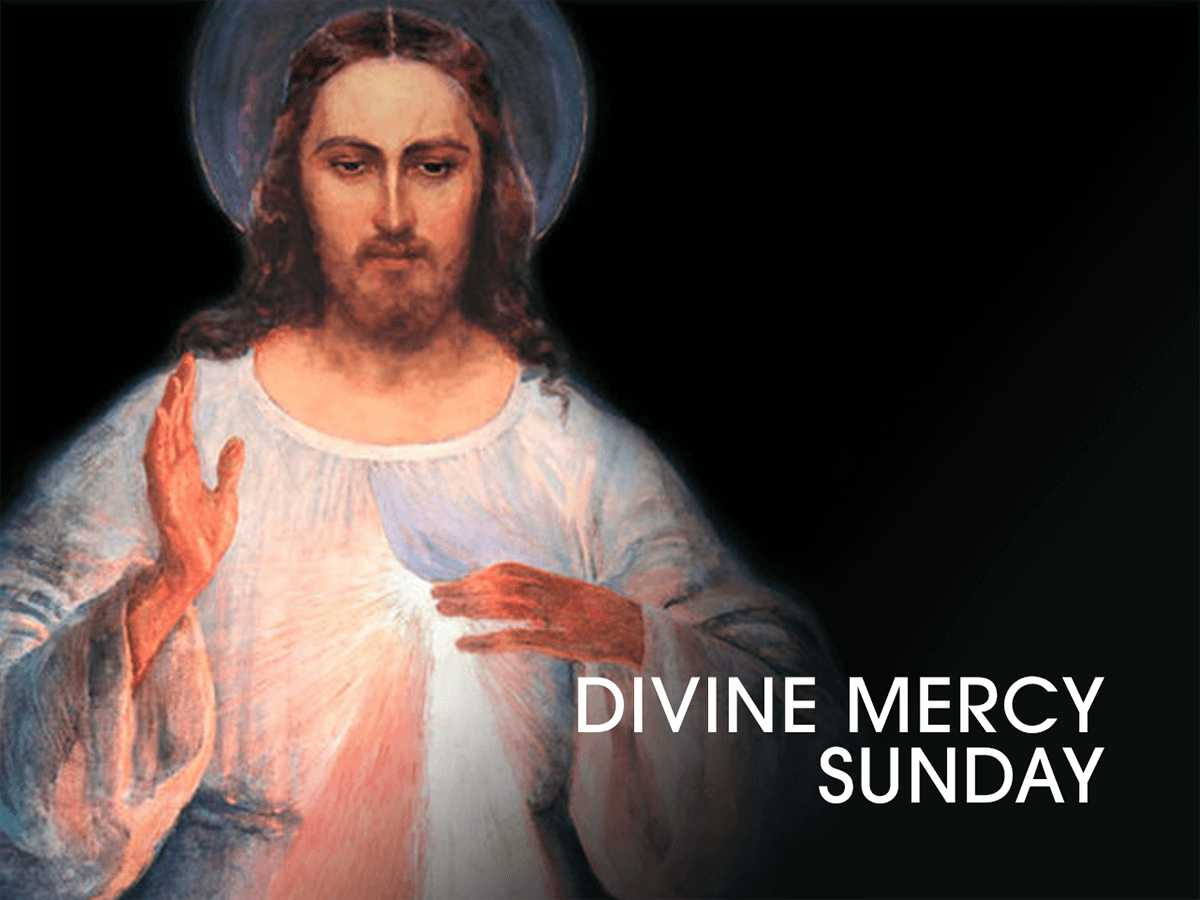
Divine Mercy Sunday
Feast Day
From ancient times the Easter octave, culminating on the 8th day, has been centered on the theme of God’s mercy and forgiveness. The final day of the octave celebration of Easter is meant to be a day of thanksgiving to God for his goodness to mankind through the Paschal mystery, that is, the Passion, death, and Resurrection of our Savior Jesus Christ. The Second Sunday of Easter was named Divine Mercy Sunday by Pope St. John Paul II following a request from Our Lord in his private revelations to St. Faustina Kowalska. On this day Jesus promised to open the floodgates of his inexhaustible mercy and shower abundant graces on those who participate in this feast day. A plenary indulgence is granted (under the usual conditions of sacramental confession, Eucharistic communion, and prayer for the intentions of the Holy Father) to the faithful who, in any church or chapel, in a spirit that is completely detached from the affection for a sin, even a venial sin, take part in the prayers and devotions held in honor of Divine Mercy, or who, in the presence of the Blessed Sacrament exposed or reserved in the tabernacle, recite the Our Father and the Creed, adding a devout prayer to the merciful Lord Jesus.